Knowledge
How Long Does It Take to Produce OEM Perfume? Timeline Breakdown
Writer:admin Time:2025-05-30 01:02 Browse:views
Bringing a perfume from concept to finished bottle on the retail shelf is a journey involving creativity, science, coordination, and logistics. If you’re planning to launch a custom fragrance through OEM (Original Equipment Manufacturer) production, one of the first questions you’re likely to ask is straightforward: How long does it take?
Understanding the timeline of OEM perfume manufacturing isn’t just academic — it’s essential for setting realistic expectations, scheduling marketing campaigns, managing cash flow, and hitting seasonal launch windows like holidays or peak retail cycles.
In this comprehensive, human‑written guide, we break down the OEM perfume production timeline from start to finish, explain all major stages, highlight what affects timing the most, and provide practical estimates you can use to plan your launch. We’ll also include five detailed tables to help you visualize timing at each phase.
1. Overview: What “Production Time” Really Means
When people ask “how long does it take to produce OEM perfume,” they usually mean the total end‑to‑end timeline — from early product concept to finished goods in your hands or on the shelf.
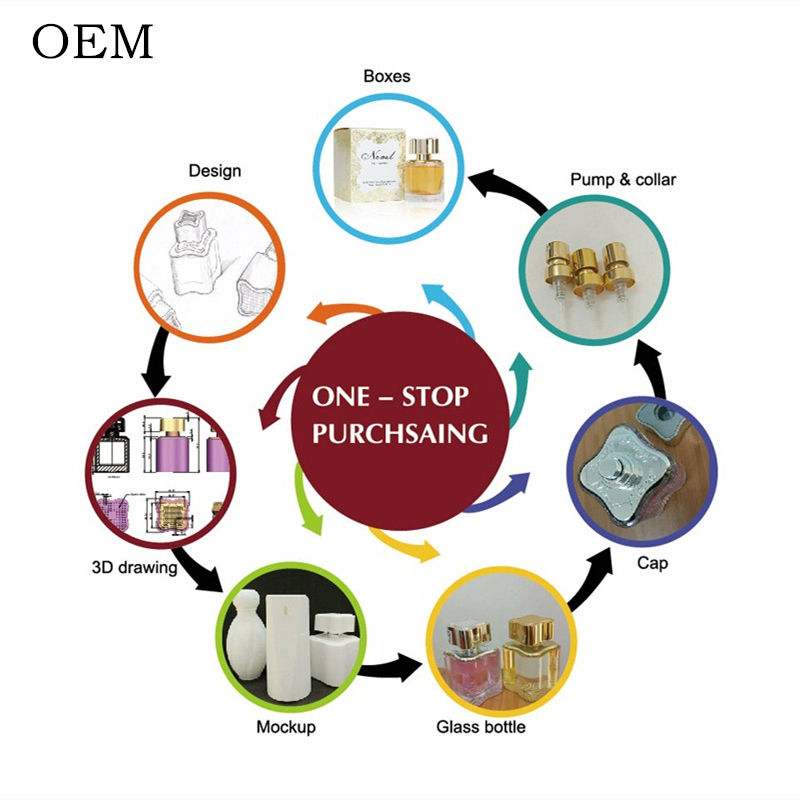
This timeline includes multiple stages:
Concept & planning
Fragrance development & sampling
Regulatory review & compliance
Production & quality control
Packaging & finishing
Shipping & delivery
Each of these stages takes time, and the total will vary based on whether you choose simple private label options or fully custom fragrance and packaging.
Table 1: High‑Level OEM Perfume Production Timeline
| Stage | Typical Duration | What Happens |
|---|---|---|
| Concept & Planning | 1–2 weeks | Define vision, target audience, and requirements |
| Fragrance Development & Sampling | 3–8 weeks | Scent creation, revisions, and approvals |
| Regulatory Review & Compliance | 1–4 weeks | Safety checks, documentation |
| Production & QC | 2–6 weeks | Bulk manufacturing and testing |
| Packaging & Finishing | 2–5 weeks | Bottle design, labeling, boxing |
| Shipping & Delivery | 1–8 weeks | Logistics depending on destination |
In total, OEM perfume projects typically take 8–30+ weeks depending on complexity. Most brands find an average range between 12 and 20 weeks reasonable for custom fragrances.
2. Stage 1: Concept & Planning (1–2 Weeks)
The process begins long before any bottle is filled. In the planning stage, you clarify your product vision and expectations. This often includes:
Deciding on your fragrance positioning (luxury, everyday, niche)
Identifying your target audience
Choosing the fragrance family (e.g., floral, citrus, oriental)
Setting budget and launch date goals
At this time, you also gather references and inspiration. You may start drafting a fragrance brief — a document that captures the desired scent profile and brand identity.
Some brands conduct market research and competitive analysis at this stage. Others work directly with their OEM partner to refine the brief collaboratively.
This stage often requires back‑and‑forth communication but it’s also one of the shortest in duration.
3. Stage 2: Fragrance Development & Sampling (3–8 Weeks)
Fragrance development is where your scent comes to life. It’s also one of the most time‑intensive parts of the timeline, especially for custom formulas.
3.1 Initial Formulation
Based on your brief, a perfumer creates prototype formulations that interpret your vision.
3.2 First Round Samples
You receive initial samples to evaluate key aspects:
Top, heart, and base notes
Longevity and sillage
Overall impression
3.3 Revisions
Most brands go through multiple rounds of sampling. Each revision typically adds 1–2 weeks to the process. Minor tweaks are common, while major direction changes can extend the schedule further.
3.4 Final Approval
Once the scent matches your expectations, you give formal approval to lock the formula for production.
Table 2: Fragrance Development Timing Breakdown
| Step | Duration | What Happens |
|---|---|---|
| Initial Formulation | 1–2 weeks | Perfumers create first scent options |
| First Sample Review | 1 week | Evaluation and feedback |
| Second/Third Rounds | 2–4 weeks | Refinement and adjustment |
| Final Approval | 1 week | Sign‑off before production |
If you choose a pre‑existing formula or an off‑the‑shelf option, this stage can be much shorter — sometimes as fast as 1–2 weeks.
4. Stage 3: Regulatory Review & Compliance (1–4 Weeks)
Perfumes are considered cosmetic products in many regions, which means they must meet specific safety and regulatory requirements. Ensuring compliance is not optional — it’s essential for legal distribution.
Regulatory checks often include:
Ingredient safety assessments
IFRA (International Fragrance Association) compliance
EU Cosmetic Regulation reviews
U.S. FDA notifications
Labeling review for accuracy and legal requirements
The manufacturer’s regulatory team typically handles this process and prepares necessary documentation. If all ingredients and formulas are straightforward, this can be quite fast, but unique or novel ingredients sometimes require additional review.
Some brands also conduct external lab testing, which adds assurance but can extend time.
5. Stage 4: Production & Quality Control (2–6 Weeks)
Once the scent formula and compliance are approved, you transition to bulk manufacturing.
5.1 Raw Material Procurement
Essential oils, aroma chemicals, alcohol blends, and other substances must be sourced. Reliable OEM partners often keep inventories of common materials, which shortens lead times.
5.2 Batch Production
Manufacturing happens in scheduled runs. Within a production window:
Ingredients are blended and let to mature if required
Perfume is filtered and stabilized
Bottles are filled
5.3 Quality Control (QC)
QC protocols ensure consistent batches. Typical checks include:
Scent consistency
Alcohol and fragrance concentration
Microbiological safety
Color and clarity
If a batch doesn’t meet QC standards, re‑work or adjustments may be necessary.
Table 3: Production & QA Timeline
| Activity | Duration | Why It Matters |
|---|---|---|
| Material Procurement | 1–2 weeks | Ensures quality raw inputs |
| Mixing & Aging | 1–2 weeks | Aroma stability and consistency |
| Filling | 1 week | Bulk transfer to bottles |
| QC Checks | 1–2 weeks | Confirms product quality |
Keep in mind that factory schedules can affect timing. Popular OEM partners often book capacity months in advance — a reason to plan early.
6. Stage 5: Packaging & Finishing (2–5 Weeks)
Packaging is a critical part of the project timeline that intersects with both design and manufacturing.
6.1 Packaging Design (If Custom)
Designing and approving custom bottles, caps, labels, and boxes can take significant time. Consultations with designers and mock‑ups often stretch over weeks.
If you choose standard packaging options, this stage moves faster.
6.2 Tooling and Pre‑Press
Custom bottle molds, printing plates, and boxes require tooling that can only begin after final design approval.
6.3 Filling & Assembly
If packaging is standard, filling and assembly happen alongside production. For custom deluxe packaging the factory must allocate additional labor and materials.
Table 4: Packaging Timeline Factors
| Packaging Type | Duration | Notes |
|---|---|---|
| Standard Bottles & Labels | 1–2 weeks | Fastest option |
| Custom Bottle Design | 3–5 weeks | Includes tooling and prototypes |
| Luxury Finishes | 4–7 weeks | Embossing, metal caps, special boxes |
Packaging quality directly impacts perception and shelf appeal — so even if it adds time, many brands view this as an investment.
7. Stage 6: Shipping & Delivery (1–8 Weeks)
Once bottles are packed and ready, the next step is transportation. Delivery time depends on:
Destination country
Shipping method (air vs sea)
Customs clearance
Warehouse processing
Air freight is faster (often 1–2 weeks) but more expensive. Sea freight is cost‑efficient but slower (4–8 weeks). You may also factor in inland transit for warehouse delivery.
Table 5: Shipping Time Estimates
| Shipping Method | Estimated Time | Best Use Case |
|---|---|---|
| Air Freight | 1–2 weeks | Urgent or small volume |
| Sea Freight | 4–8 weeks | Large volume, cost‑efficient |
| Express Courier | 3–7 days | Samples or urgent parcels |
Planning shipping early ensures you’re not rushed at the end and can align product arrival with launch dates.
8. Factors That Influence Overall Timing
While the tables above provide typical durations, your actual timeline can be shorter or longer based on several factors:
8.1 Customization Level
Fully bespoke scent and packaging take longer than using standard formulas and stock bottles.
8.2 Manufacturer Capacity
Reputable OEM partners may have longer lead times because their production schedules fill up quickly. To identify fragrance manufacturers with various capabilities and timelines, platforms such as https://www.perfume-manufacturer.com/ can be useful.
8.3 Regulatory Complexity
Some scents that include rare ingredients may require additional safety documentation.
8.4 Seasonal Demand
Industry busy seasons (holiday launch windows) often extend lead times due to higher demand at factories.
8.5 Communication Efficiency
Clear briefs and prompt feedback from your team help shorten review cycles.
9. Typical Timeline Scenarios
To make this even more practical, here are timeline scenarios that reflect common project types:
Scenario A: Quick Private Label Launch
Uses pre‑existing formula
Standard packaging
Estimated Time: 6–10 weeks
Scenario B: Mid‑Range Custom Scent with Standard Bottle
Custom fragrance
Standard packaging
Estimated Time: 12–18 weeks
Scenario C: Fully Custom Premium Fragrance
Custom scent
Custom bottle and luxury packaging
Estimated Time: 18–30+ weeks
10. Tips to Manage Your Timeline Effectively
To keep your OEM perfume project on schedule:
Start planning early — once you decide on a project, begin concept work immediately.
Set milestone deadlines — align scent, design, and compliance approvals.
Communicate clearly — provide feedback promptly to avoid delays.
Review factory capacity — ensure your OEM partner can meet your timeline.
Plan logistics early — shipping and customs are often overlooked but crucial.
Conclusion: What to Expect
Creating an OEM perfume is a rewarding but time‑bound process. Most brands find it takes 3 to 7 months to go from initial idea to finished product in their hands, with variability based on customization and external factors.
The key to success is planning, clear communication, and early engagement with your OEM partner. By understanding each stage of the timeline, you avoid surprises, stay on budget, and make sure your fragrance reaches the market when you intend.
If you’d like a personalized timeline estimate based on your fragrance and packaging vision, feel free to share your product brief — I can help map out the dates for you!
Related Article
CATEGORIES
CONTACT US
Whatsapp: +8618998453346
Phone: +8618998453346
Tel: +8618998453346
Email: [email protected]
Addr: Baiyun District, Guangzhou, Guangdong Province, China
Hot Goods
 <
<
 <
<
 <
<
 <
<
 <
<
 <
<
 <
<
<
<
 <
<
 <
<